
Launch status: Graveyard Keeper 2 is out now worldwide (September 22, 2026) on PC, PS5, Xbox Series X|S, Switch & Switch 2 — full details in the release date & platform schedule.
On this page 13 sections
- Direct Solution & Tactical Verdict
- Core Data & Verification Matrix
- Official Video Reference
- Conveyor Belt Logistics, Hopper Routing & Network Topologies
- Mechanical Assembly Tables & Continuous Component Crafting
- Smart Sorting Chests, Filter Hoppers & Output Bins
- Supply Stations vs Storage Chests: Fabric Bundles & Trade Crate Logistics
- Undead Workforce Efficiency & Patch 1.005 to 1.011 Balance Tuning
- Spatial Clearances & Factory Buffer Sizing
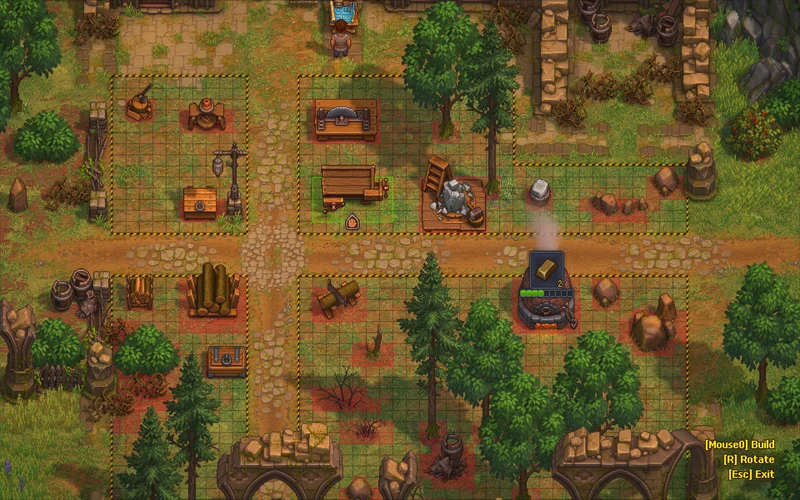
- Workshop Demolition & Moveable Workstations SOP (Update 1.011)
- End-Game Factory Deadlock Prevention & Conveyor Troubleshooting
- Step-by-Step Strategic Walkthrough
- Frequently Asked Questions
Core Data & Verification Matrix
| System Type | Modular Directional Conveyor Belts & Mechanical Assembly Tables |
| Tech Requirement | Progress through the tech tree to unlock industrial automation nodes |
| Power Source | Zombie labor — undead workers operate semi-automatic machines in underground factories |
| Supported Items | Ores, timber flitch, cut stone slabs, iron ingots, and crafted building components |
| Corpse Restrictions | Conveyors carry resources and crafted goods; corpse handling runs strictly through the morgue |
| Update 1.011 Enhancements | Moveable workstations in build mode, zombie autocrafting at furnaces/kilns/ovens, and belts facing up by default |
Official Video Reference
Verified gameplay showcase footage covering key mechanics and features discussed in this guide.
Conveyor Belt Logistics, Hopper Routing & Network Topologies
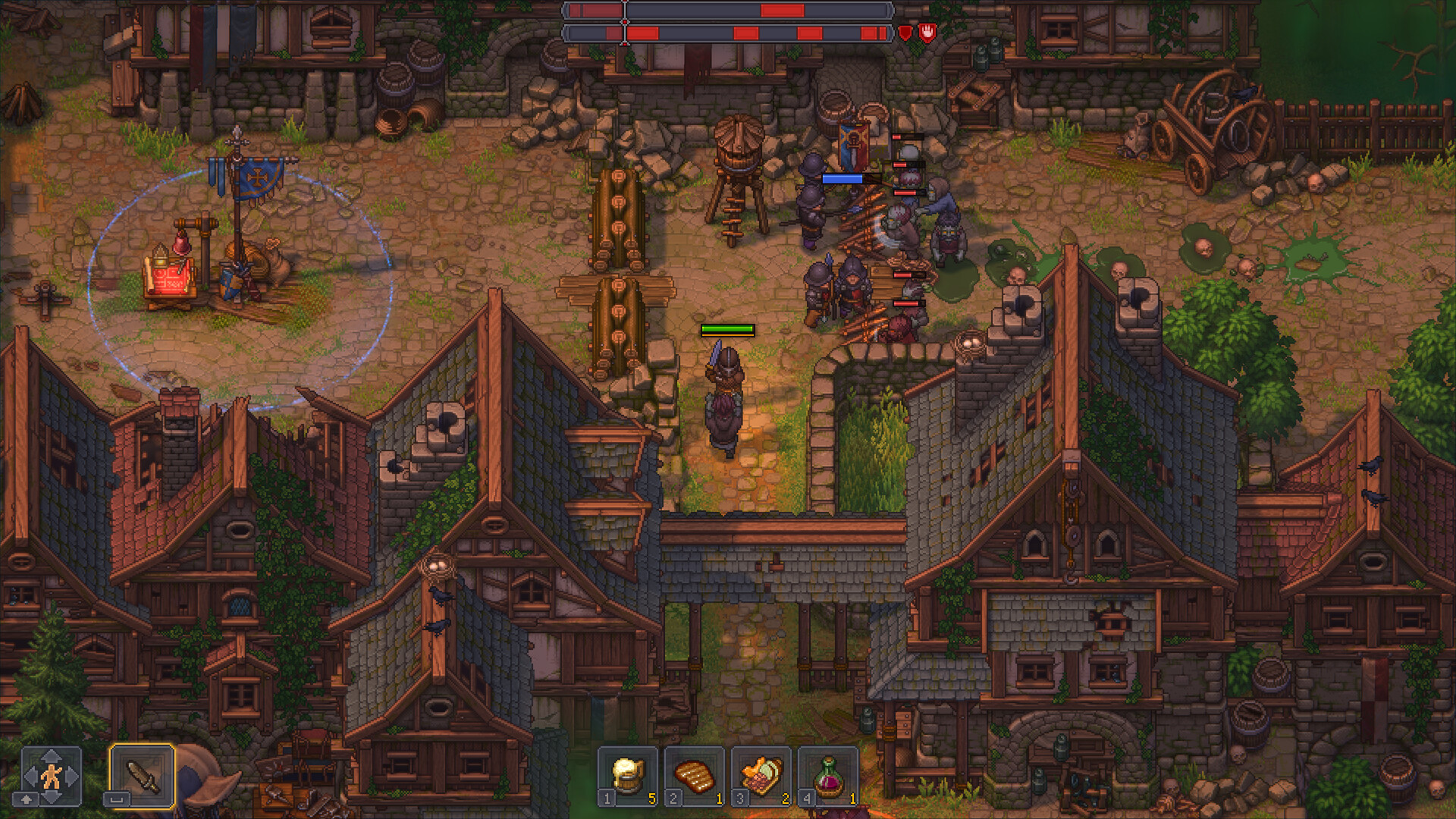
Transitioning from manual hauling to conveyor logistics is the defining milestone of mid-game estate management. Belts allow continuous flow of raw timber, stone slabs, and smelted ingots directly into specialized workstations.
Conveyor lines operate directionally. Connecting the output chute of the western stone quarry and northern mining veins (see our Iron & Coal Fast Guide) directly to basement masonry cutters eliminates the exhausting physical labor of carrying heavy stone chunks and metal across the valley.
Always incorporate automated overflow bins and filter hoppers at junction points. If an input hopper fills to maximum capacity, items on the belt will back up, halting the entire quarry supply chain until manually cleared. Furthermore, powering extensive conveyor loops requires commanding resilient workers (see our Zombie Automation & Armies Guide) and generating sufficient weekly spiritual capital via sermons (see our Faith & Church Sermons Guide).
| Logistics Component | Transport Speed | Holding Capacity | Crafting Station | Recipe Cost |
|---|---|---|---|---|
| Straight Conveyor (x5) | 1 Tile / Sec | 5 Items in Transit | Carpenter Workbench II | 4x Wood Flitch, 2x Wooden Gear, 2x Nails |
| Corner Conveyor Chute | 1 Tile / Sec | 1 Item in Turn | Carpenter Workbench II | 2x Wood Flitch, 1x Wooden Gear |
| Sorting Filter Hopper | Instantaneous | Up to 20 Stacks | Anvil II | 4x Steel Sheet, 2x Complex Parts |
| Automated Overflow Bin | Storage Buffer | Up to 50 Raw Blocks | Carpenter Workbench II | 8x Timber, 4x Steel Nails |
| Underground Drop Chute | Vertical Drop | Continuous Transit | Masonry Workbench | 6x Cut Stone, 2x Iron Bracket |
Conveyor Logistics Architecture: Deploying modular conveyor networks completely eliminates the manual labor bottlenecks that restricted industrial output in early game stages. Placing corner chutes and straight conveyors with deliberate buffer zones ensures that mined stone and cut timber flow into subterranean assembly benches with zero transit delay. Smart sorting hoppers ensure that intermediate crafting components like iron nails and wooden dowels are separated into designated chests, preventing full storage buffers from locking the entire production pipeline.
Place an automated overflow bin at the end of every conveyor branch. If downstream assembly tables stop crafting, excess items divert into the bin rather than jamming the belt.
Mechanical Assembly Tables & Continuous Component Crafting
Stationing resurrected zombies at multi-stage mechanical assembly tables allows the continuous fabrication of building flitch, stone markers, and iron hardware without player interaction.
| Assembly Station | Input Belt Material | Stationed Worker Slot | Continuous Output | Optimal Zombie Skull Tier |
|---|---|---|---|---|
| Sawmill Assembly Table | Raw Pine Logs | 1 Zombie Sawyer | Wooden Flitch, Planks, Beams | 6-8 White Skulls |
| Automated Stone Carver | Raw Stone Slabs | 1 Zombie Mason | Stone Gravestones, Border Fences | 8-10 White Skulls |
| Basement Hardware Bench | Iron Ingots & Planks | 2 Zombie Artisans | Nails, Complex Parts, Brackets | 10-12 White Skulls |
| Architectural Drafter | Paper, Ink, Marble Slabs | 1 Zombie Scribe | Building Blueprints, Town Permits | 12+ White Skulls |
Mechanical Production Optimization: Integrating automated assembly tables into conveyor networks converts raw estate harvests into refined construction components at triple the speed of manual fabrication. Stationing high-skull undead artisans at the basement hardware bench ensures a continuous reserve of nails and iron brackets, providing the essential fasteners required for municipal town reconstruction. Allocating dedicated raw material feed chutes directly into each workstation eliminates worker idle time completely. Continuous assembly loops free the Keeper from repetitive craft menus to focus on high-level estate management.
Verified in Official Updates 1.008 and 1.009: keep active undead workers within your camp capacity cap to avoid the zombie Panic debuff, and space workyard conveyor lanes clearly around the Sawhorse, Town Warehouse, and vine cellar.
Smart Sorting Chests, Filter Hoppers & Output Bins
Preventing material gridlock requires configuring smart sorting chests. Assigning designated item filters ensures high-volume resources route cleanly into corresponding workshop storage chests.
| Storage Unit | Filter Slot Capacity | Routing Logic | Overflow Protection | Construction Materials |
|---|---|---|---|---|
| Filtered Wood Bin | 3 Dedicated Wood Types | Pulls matching flitch/planks | Routes excess to overflow bin | 6x Wooden Plank, 2x Nails |
| Filtered Masonry Trunk | 2 Stone / Marble Types | Pulls matching cut slabs | Halts feeder belt when full | 4x Cut Stone, 2x Iron Bracket |
| Universal Sorter Hopper | 8 Custom Filter Slots | Splits belt into 3 exit tracks | Rejects unfiltered clutter items | 4x Steel Plate, 4x Complex Parts |
| Town Export Crate Depot | Bulk Commodity Crates | Pulls packaged trade crates | Ready for weekly cart shipment | 8x Hardwood, 4x Steel Sheet |
Inventory Routing Dynamics: Deploying universal sorter hoppers at central workshop crossroads prevents divergent supply chains from contaminating specialized storage chests. By programming filter slots to divert stone blocks into masonry racks while channeling iron ingots toward anvil benches, keepers eliminate manual inventory transfers entirely. Sizing output depots to accommodate bulk trade crates ensures that finished municipal construction supplies remain organized for weekly transport into The Town. Maintaining clean inventory separation prevents workshop chest overflow during unattended operations.
Supply Stations vs Storage Chests: Fabric Bundles & Trade Crate Logistics
A frequent point of confusion among players is why fabric bundles, trade packages, and export crates cannot be placed into standard wooden storage chests. In Graveyard Keeper 2, items are split into two physical logistics tiers: loose stackables (ores, ingots, timber flitch, nails) and bulk supply units (fabric bundles, vegetable crates, stone crates). Loose items belong in standard chests and filter hoppers, while bulk units must be routed to dedicated Supply Stations, Workyard Crate Racks, or hauled by Porters to the Town Warehouse. Attempting to force fabric bundles into personal or workshop chests results in an invalid container error. In Official Update 1.007, conveyor supplier station draw layers were fixed, and Update 1.010 resolved porter wall-clipping, ensuring smooth automated transport between textile benches and supply depots.
| Logistics Storage Unit | Permitted Cargo Classes | Incompatible Cargo Classes | Automation / Routing Method | Optimal Placement |
|---|---|---|---|---|
| Standard Wooden / Iron Chest | Loose resources (flitch, ingots, nails, food) | Fabric bundles, trade crates, export packages | Conveyor filter hoppers & zombie craftsman pull | Workyard assembly benches & basement cellar |
| Supply Station (Supplier Depot) | Bulk trade crates, fabric bundles, export goods | Loose ores, raw crops, unrefined stone chunks | Zombie Porters load directly from packing tables | Exit corridor adjacent to Town transport cart |
| Workyard Crate Rack | Carved stone crates, timber packages, goods pallets | Individual loose nails or raw iron ore | Temporary staging rack for zombie porters | Between carpenter yard and outbound road |
| Town Warehouse Depot | All finalized trade bundles and export crates | Raw unworked estate debris | Weekly merchant cart shipment for silver return | Town Harbor merchant district |
Logistics Tier Separation: Separating loose workshop materials from packaged commodity units prevents automated assembly belts from choking on oversized trade crates. By assigning dedicated zombie porters to carry fabric bundles from looms straight to Supply Stations, players preserve chest slots for raw component fabrication.
Undead Workforce Efficiency & Patch 1.005 to 1.011 Balance Tuning
Automating your workyard relies entirely on undead labor. Official Updates 1.005 through 1.011 have completely overhauled station mobility, autocrafting queues, and fuel balance.
In official Update 1.005, developer Lazy Bear Games significantly increased tree-log sawing yield, providing more wood chunks per log and dramatically reducing manual logging excursions. Crafting and fuel costs across the Kiln and Furnace were also rebalanced for streamlined component smelting.
Update 1.006 resolved long-standing collision bugs where players became stuck between kitchen chests and firewood, and fixed an issue where kitchen zombies consumed raw ingredients without producing dishes.
In Official Update 1.011, major quality-of-life additions arrived: placed objects and workstations can now be freely moved in build mode without destroying them, zombie assistants can start and finish autocrafts at Furnaces, Kilns, Kitchen Ovens, Compost Piles, and Distillation Cubes, conveyor belts place facing upward by default, and quarry zombies carry Stone and Marble directly to chests without needing a quarry assistant.
| Balance Area | Pre-Patch Mechanic | Update 1.011 Adjustment | Gameplay Improvement | Long-Term Impact |
|---|---|---|---|---|
| Workstation Relocation | Must demolish & rebuild with material loss | Moveable workstations in build mode | Rearrange workyard layout instantly | Zero resource penalty for factory redesigns |
| Zombie Autocrafting | Keeper had to manually queue each craft | Zombie assistants start & finish autocrafts | Furnaces, Kilns, Ovens, Compost operate 24/7 | Continuous ingot, brick, food & peat production |
| Quarry Logistics | Required dedicated quarry zombie assistant | Quarry workers bring Stone/Marble to chests | Frees up 1 zombie per quarry site | Reassign freed undead laborers to crafters |
| Conveyor Direction | Default placement varied or misaligned | Conveyor belts placed facing up by default | Faster layout setup with fewer rotation clicks | Smooth initial hopper connection |
| Zombie Disposal | Unable to destroy or remove obsolete zombies | Zombies can now be cremated at Crematorium | Eliminates unwanted low-skull worker clutter | Enables clean upgrading to 16-skull elites |
Software Balance Evolution: The additions in Update 1.011 eliminate the primary friction points of factory automation. Allowing workstations to be relocated freely enables keepers to solve corridor bottlenecks instantly, while zombie autocrafting across Furnaces, Kilns, and Ovens creates true end-to-end hands-off production chains.
Note that while zombie assistants can now start and finish autocrafts and earn tech points upon completion, they still require the player to possess the requisite tech tree mastery to start the crafts.
Spatial Clearances & Factory Buffer Sizing
Designing high-throughput factory floors requires establishing adequate physical clearance around conveyor tracks and machine tables to prevent worker pathfinding deadlocks.
| Factory Section | Recommended Floor Clearance | Buffer Storage Requirement | Worker Jam Risk | Architectural Layout Advice |
|---|---|---|---|---|
| Sawmill Timber Chute | 2 Full Tiles Perimeter | 50-Unit Timber Stockpile | Low (Unidirectional carry) | Align straight north-south along fence |
| Masonry Grinding Yard | 3 Full Tiles Perimeter | 2x Circular Stone Stockpiles | Medium (Wide slab turning) | Leave central courtyard open for transport |
| Smelting Battery Benches | 2 Full Tiles Perimeter | Dedicated Coal & Ore Bins | High (Smoke & ash collision) | Isolate along eastern boundary wall |
| Basement Assembly Lines | 2.5 Tiles Between Belts | Filtered Output Trunks | Low (Straight conveyor loops) | Stack assembly tables linearly along walls |
Spatial Floor Planning Guidelines: Maintaining wide clearance buffers between parallel conveyor belts ensures that automated helpers can navigate between machine interaction points without triggering collision stalls. Placing bulky raw stockpiles along the perimeter fence creates a clean outer logistical ring that feeds directly into central assembly benches. Incorporating dedicated coal and ore bins directly adjacent to smelting furnaces minimizes transit distances during high-volume steel batch production. Leaving unobstructed two-tile transit corridors guarantees fluid movement for both the player and stationed laborers.
Workshop Demolition & Moveable Workstations SOP (Update 1.011)
In Official Update 1.011, developer Lazy Bear Games added full moveable object support in build mode. Players no longer need to deconstruct and rebuild crafting benches, ovens, or hoppers when reorganizing factory corridors.
| Action Type | Build Mode Command | Resource Cost | Contents Preservation | Safety Guideline |
|---|---|---|---|---|
| Move Workstation (New in 1.011) | Build Mode -> Move | 0 Resources (Free relocation) | Station queue and items preserved | Ensure target destination tile is clear |
| Dismantle Conveyor Belt | Build Menu -> Deconstruct | 100% Component Refund | Items on belt drop to inventory | Clear items from belt before dismantling |
| Cremate Obsolete Zombie (New in 1.011) | Crematorium interaction | Consumes Firewood / Peat | Yields Salt & Ash | Useful for pruning low-skull workers |
| Relocate Sorting Chest | Build Menu -> Move | 0 Resources | Preserves Chest Contents | Check filter alignment after moving |
Estate Restructuring Protocol: The introduction of moveable workstations in Update 1.011 eliminates the resource waste of tearing down high-tier crafting benches. Keepers can now iterate freely on conveyor topologies and spatial clearances without rebuilding costs.
End-Game Factory Deadlock Prevention & Conveyor Troubleshooting
A widespread community hurdle in late-game factory logistics (often highlighted in player discussions as 'losing my mind over end-game factory logistics') is total factory paralysis: conveyor loops fill up, porters freeze with items in their hands, and sorting hoppers reject incoming parts. This deadlock typically occurs when a closed-loop conveyor lacks an explicit terminal overflow chest or when bulk trade units (fabric bundles, vegetable crates) inadvertently enter loose-resource feeder tracks. In Update 1.011, conveyor belts place facing up by default to minimize directional placement errors, and moveable workstations allow players to instantly unwedge tight factory choke points.
| Deadlock Scenario | Root Logistics Cause | Immediate System Fix | Architectural Prevention |
|---|---|---|---|
| Full Conveyor Belt Gridlock | Downstream storage chest filled to capacity | Clear receiving chest; attach automated overflow bin | Always terminate conveyor lines at dedicated overflow trunks |
| Porter Freezes Holding Items | Destination chest missing matching filter slot | Add 1 item into slot 1 of chest; pick up and re-place zombie | Lock first slot of every destination trunk with target material |
| Trade Crates Stalling on Belts | Bulk commodity mixed into loose component hopper | Manually pick up bulk crate; route to Crate Rack | Separate Supply Stations from standard wooden chests |
| Smelting Battery Starvation | Furnaces run out of fuel or ore without restart | Assign Zombie Assistant (Autocrafts live in 1.011) | Ensure Coal / Firewood bins sit adjacent to Kilns |
Deadlock Mitigation Strategy: Structuring production into isolated linear corridors rather than interdependent feedback loops prevents domino-effect factory freezes. Installing terminal overflow bins ensures continuous belt clearance even when crafting benches reach peak buffer.
Step-by-Step Strategic Walkthrough
- 01 · Advance the Tech Tree: Conveyor-driven assembly lines arrive as you progress through the tech tree and stock the workyard with resurrected zombie laborers.
- 02 · Lay Conveyor Routing Networks: Connect raw extraction stockpiles (timber yard, quarry) to underground basement hoppers using directional conveyor belts.
- 03 · Install Mechanical Assembly Tables: Place multi-stage craft benches along belt lines so zombie workers pull intermediate components automatically.
- 04 · Configure Smart Sorting Chests: Deploy filter hoppers to route finished stone fences, wooden beams, and iron nails into designated storage zones.
- 05 · Synchronize Zombie Labor Caps: Assign high-skull workers to bottleneck stations. Corpse quality caps zombie perks, ensuring long assembly lines run smoothly.
- 06 · Prevent Buffer Gridlock: Ensure overflow bins are attached; per Update 1.011, workstations can be freely rearranged in build mode, and quarry workers transport stone and marble without needing a quarry assistant.
Frequently Asked Questions
How do conveyor belts work in Graveyard Keeper 2?
Conveyors carry resources and crafted components automatically between stockpiles, workbenches, and storage chests, powered entirely by stationed undead zombie laborers.
Can zombies operate conveyor assembly tables in GK2?
Yes. Resurrected zombies can be stationed at mechanical assembly tables to craft continuous queues of planks, stone blocks, and nails using conveyor-fed materials.
Can you move workstations in Graveyard Keeper 2 without destroying them?
Yes! In Official Update 1.011, developer Lazy Bear Games added the ability to move placed objects and workstations directly in build mode, eliminating the need to destroy and rebuild structures when reorganizing your workyard.
Can zombie assistants autocraft at furnaces and ovens in Graveyard Keeper 2?
Yes. In Official Update 1.011, zombie assistants can start and finish autocrafts at Furnaces and Kilns in the Yard, Kitchen Ovens in the Home, Compost Piles in the Garden, Cider and Wine production in the Vineyard Basement, and Distillation Cubes in the Alchemy Lab. They earn tech points upon craft completion, provided the player has unlocked the prerequisite craft mastery.
How do you fix end-game factory logistics deadlocks and conveyor freezing in GK2?
To resolve factory deadlocks: 1) Attach automated overflow bins to the end of every conveyor branch so full chests don't freeze the belt; 2) Ensure receiving chests have matching item filters set in slot 1; 3) Separate loose materials from bulk trade crates (route crates to Supply Stations); 4) Use build mode in Update 1.011 to move tight workstations and widen pathing clearances; and 5) Pick up and re-place any frozen porters to reset their active cargo buffers.
Can zombies be cremated in Graveyard Keeper 2?
Yes. As of Official Update 1.011, zombies can now be cremated at the Crematorium, allowing players to cleanly dispose of low-skull early-game zombies when upgrading to 16-skull master workers.
Do conveyor belts require fuel or electrical power?
No fuel or electricity is required in Graveyard Keeper 2. Workshop automation is powered entirely by undead labor: zombies operate semi-automatic machines without asking for food, fuel, or wages.
Can conveyor belts transport corpses in GK2?
No. Conveyors are strictly designed to transport resources, ores, and crafted goods. Corpse handling runs exclusively through the morgue, autopsy tables, and embalming slabs.
Why did my farm zombie drop wheat near the well?
If crop chests are completely full or lack a dedicated wheat filter slot, farm zombies path toward the nearest open space. Build an adjacent farm storage chest and place 1 wheat bundle in slot 1 to fix deposit routing.
What did Update 1.005, 1.006, and 1.007 change for automation?
Update 1.005 increased lumber yield per log and rebalanced kiln and furnace fuel costs. Update 1.006 fixed kitchen zombies consuming ingredients without producing dishes. Update 1.007 fixed the potter's wheel getting stuck on Craft, fixed being unable to obtain polished stone, fixed conveyor supplier station draw layers, and fixed getting wedged between workstations when pushed by moving zombies.
Why does mandatory zombie automation feel punishing in mid-game, and how do you optimize it?
Zombie automation can feel punishing if players unlock assembly tables before establishing storage buffers and sorting chests. Stationed zombies produce items continuously; without designated output chests, workstations fill up and stop. To optimize, prioritize filter hoppers, limit active worker squads, and deploy excess zombies to defensive barricades (which earn red tech points per fight as of Update 1.007).
How does the zombie porter deliver items to the warehouse?
Zombie porters fetch finished goods from assigned workshop output crates and transport them along designated logistics corridors into the Town Warehouse or cellar hoppers. Ensure warehouse chests have matching item slots filtered; if bins are full or missing an assigned slot, porters stall at the entrance. In Update 1.007, zombie caretaker crashes and workstation push-clipping were fully patched.
Can I dismantle and move conveyor belts after placing them?
Yes. Open the building interaction menu to deconstruct unwanted conveyors, signs, and fixtures, refunding materials back into your inventory. In Update 1.011, you can also move placed workstations and objects directly in build mode without deconstructing them.
Why did my factory automation stop running even though I followed the tutorial exactly?
Factory stalls are usually caused by: 1) Downstream storage chests becoming completely full with no overflow chute, deadlocking the belt; 2) Workstation collision bounding boxes blocking zombie pathing; or 3) Zombie haulers freezing with carried items. In Update 1.008 and 1.009, developer Lazy Bear Games cleaned up collisions on conveyor storage, crematoriums, and assistant stations, unblocked overhead carried boxes, and fixed haulers at the sawmill, mine, clay pit, and sand pit getting stuck.
What did Update 1.008 and 1.009 fix for factory automation?
Update 1.008 resolved an infinite loading screen crash caused by conveyor exceptions and cleaned up workyard clipping. Update 1.009 fixed collisions on conveyor storage, crematoriums, and resurrection tables, prevented overhead boxes from blocking movement, and fixed zombies freezing when reassigned to stations.
What automation upgrades arrived in Update 1.010 and 1.011?
Official Update 1.010 enabled zombies to yield more conveyor gears with the Belt Master perk and fixed porter wall-clipping. Official Update 1.011 added moveable workstations in build mode, enabled zombie assistants to start/finish autocrafts at kilns/furnaces/ovens, made quarry workers carry stone/marble without assistants, made conveyor belts face up by default, and allowed zombies to be cremated.
Why do zombie porters keep freezing while carrying items in Graveyard Keeper 2?
Zombie porters in Graveyard Keeper 2 freeze when their designated destination chest, cellar hopper, or warehouse bin is completely full, or when the chest lacks an available matching filter slot. While Official Update 1.010 resolved porters walking through factory walls, a full destination container still halts delivery AI. To fix a frozen porter, clear space in the receiving chest, then pick up the zombie and place it back onto its workstation to reset its held item buffer.
Why aren't items on the factory floor being moved to chests or stockpiles?
Ground-level hoppers and floor stockpiles in Graveyard Keeper 2 are designed as directional feeder chutes for the underground basement factory rather than standard passive chests. Items dropped into these hoppers flow along subterranean conveyor belts to automated assembly benches. If items stop moving, check if downstream basement storage trunks are full or if the conveyor belt direction is misaligned.
Why won't my fabric bundle or trade crate go into a storage chest in Graveyard Keeper 2?
In Graveyard Keeper 2, fabric bundles, crop crates, and trade merchandise belong to the 'bulk supply / trade crate' class. Standard wooden storage trunks and personal chests only accept loose materials (like ingots, flitch, and raw crops). Bulk trade items must be stored on dedicated Workyard Crate Racks or routed directly through a Supply Station to the Town Warehouse using a zombie porter.
How do Supply Stations work with workyard conveyors and zombie porters?
A Supply Station acts as a buffer depot specifically designed for bulk packaged goods. When fabric looms or packing tables produce bundles, connect a conveyor or assign a zombie porter to carry crates directly into the Supply Station. The porter will then transfer cargo to the Town Warehouse during delivery cycles.
Related Strategy Guides
Fast Travel & Map
Combat & DungeonsCombat & Town Battles
Walkthrough & StarterDemo Starter Route
Economy & TradingEarly Economy & Trade
Church & TheologyScience & Faith
Walkthrough & StarterBeginner Guide
Walkthrough & StarterGK2 vs GK1
Workyard & AutomationZombie Armies
Alchemy & MagicAlchemy & Autopsy