
Launch status: Graveyard Keeper 2 is out now worldwide (September 22, 2026) on PC, PS5, Xbox Series X|S, Switch & Switch 2 — full details in the release date & platform schedule.

On this page 11 sections
- Direct Solution & Tactical Verdict
- Core Data & Verification Matrix
- Official Video Reference
- Anatomical Surgery Matrix & Skull Value Mechanics
- Surgical Mishaps, Tool Failures & Quality Degradation
- Embalming Fluid Formulations & Skull Conversion Ratios
- The Alchemy Laboratory & Reagent Extraction Benches
- Alchemy Mill & Hand Mixer Extraction Formulas
- Cold Storage Pallets, Salt Baths & Decay Mitigation
- Step-by-Step Strategic Walkthrough
- Frequently Asked Questions
Core Data & Verification Matrix
| Standard Surgical Rule | Blood and Fat removal always improves corpse quality by converting Red to White Skulls |
| Variable Vital Organs | Brain, Heart, and Intestines possess randomized skull modifiers (-2 to +3) |
| Embalming Golden Ratio | Lye Injection (+1 Red, +1 White) → Silver Injection (-1 Red, +1 White) → Gold Injection (-2 Red, +2 White) |
| Lab Processing Stations | Alchemy Mill (Powders), Hand Mixer (Solutions), Distillation Cube (Extracts) |
| Decay Freezing | Bodies placed on refrigerated Morgue Pallets suffer 0% decay rate |
| Dark Alchemy Tier | Forbidden Necronomicon texts unlock dark organ synthesis and soul refinement |
Official Video Reference
Verified gameplay showcase footage covering key mechanics and features discussed in this guide.
Anatomical Surgery Matrix & Skull Value Mechanics
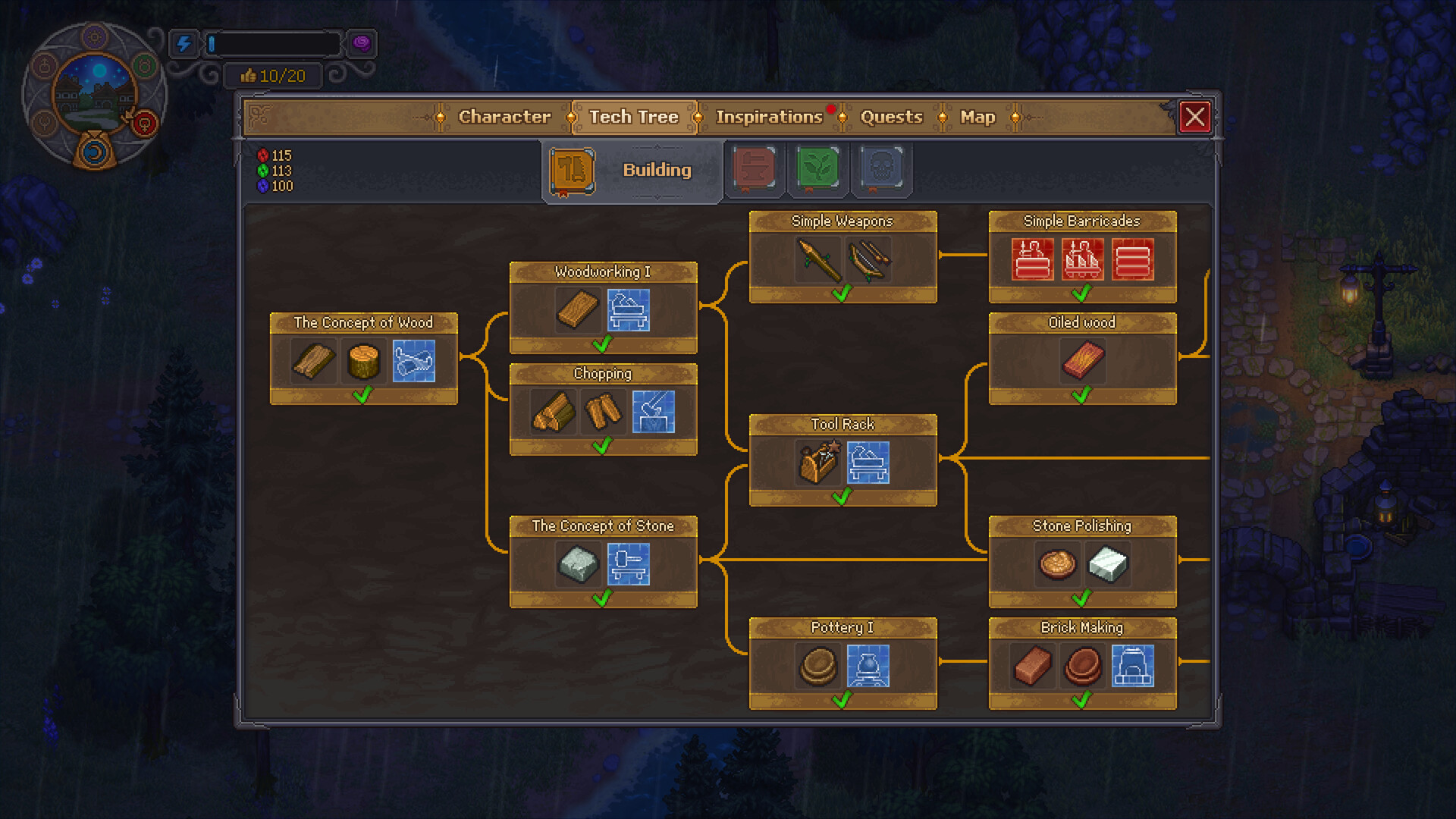
Every organ extracted from a corpse alters its final skull rating. Understanding the fixed and variable values of internal organs is essential to creating flawless bodies for the graveyard or the resurrection slab.
Fixed organs (Blood, Fat, Bone, Skin, Skull) always produce identical skull alterations across every body. Removing Skin trades 1 White Skull for 1 Red Skull, while removing Bones has zero skull effect but provides crafting calcium.
Variable vital organs (Brain, Heart, Intestines) hold randomized skull values generated upon the corpse's arrival. Removing them blindly risks devastating your cemetery rating.
| Extracted Organ | Organ Type | Skull Rating Impact | Crafting / Material Utility | Surgical Priority |
|---|---|---|---|---|
| Blood | Fixed Vital | +1 White Skull, -1 Red Skull | Used in dark ink & combat potions | Priority 1 (Always remove) |
| Fat | Fixed Vital | +1 White Skull, -1 Red Skull | Rendered into oil and church candles | Priority 1 (Always remove) |
| Skin | Fixed Surface | -1 White Skull, +1 Red Skull | Crafted into parchment and book covers | Avoid removing on high-rating corpses |
| Skull | Fixed Bone | +1 Red Skull | Used in church decor and alchemy rituals | Only remove from disposal corpses |
| Bones | Fixed Skeletal | Zero Skull Change | Ground into White Powder at Alchemy Mill | Safe extraction on any corpse |
| Brain | Variable Vital | -2 to +3 Randomized Skulls | Advanced alchemy and neurological tech | Inspect with Surgeon Perk before cutting |
Surgical Matrix Optimization: Executing a disciplined surgical protocol prevents catastrophic skull degradation on incoming bodies. Extracting blood and fat represents an absolute universal rule, as both procedures consistently remove negative red skulls while boosting positive white skulls with zero downside. Conversely, extracting skin should be strictly reserved for low-grade bodies earmarked for cremation or anatomical research, since sacrificing a white skull damages grave rating thresholds. Variable vital organs must remain untouched until the Anatomy II talent reveals their hidden statistical modifiers.
Never remove Flesh early in your autopsy routine, as it removes 1 White Skull and adds 1 Red Skull. Furthermore, as of official Update 1.009, the Son of a Butcher perk now properly applies its extraction bonus to organ surgery and pocket harvesting at the Autopsy Table, eliminating previous extraction drop losses.
Surgical Mishaps, Tool Failures & Quality Degradation
Attempting surgery with dull scalpels or without proper medical perks risks inflicting a 'Surgical Error'. A mishap permanently damages the corpse, converting valuable White Skulls into irreparable Red Skulls.
| Scalpel Tier | Mishap Probability | Durability Cost / Cut | Surgical Perk Required | Failure Consequence |
|---|---|---|---|---|
| Rusty Scalpel | 35% Mishap Chance | 5 Durability | None (Baseline) | Corpse gains +1 Red Skull, loses tissue integrity |
| Iron Scalpel | 15% Mishap Chance | 3 Durability | Surgeon I | Minor tissue damage (-10% embalming efficiency) |
| Steel Scalpel | 2% Mishap Chance | 1 Durability | Surgeon II | Negligible risk of surgical scarring |
| Master Gold Scalpel | 0% Mishap Chance | 0.5 Durability | Master Anatomist | Guaranteed pristine incision with +1 Organ yield |
Surgical Risk Mitigation: Eliminating surgical failure probabilities requires rapid progression toward forged steel scalpels paired with the Surgeon talent perk. Utilizing rusty implements on corpses with high initial potential risks irreparable tissue lacerations that permanently degrade the body's burial cap. Keepers should maintain backup iron scalpels in the morgue cabinet to prevent resorting to degraded tools when handling noble or merchant corpses delivered from the urban center. Investing early science points into surgical precision yields exponential returns by preserving pristine cadavers for high-value cemetery plots.
Embalming Fluid Formulations & Skull Conversion Ratios
Constructing the Embalming Table allows the injection of chemical preservatives directly into arterial systems. Executing the classic three-stage embalming sequence permanently elevates a corpse's skull cap beyond natural biological limits.
| Embalming Solution | Preparation Station | Required Reagents | Skull Modification | Sequential Injection Order |
|---|---|---|---|---|
| Lye Solution | Alchemy Workbench II | 1x Lye, 1x Water, 1x Conical Flask | +1 Red Skull, +1 White Skull | Step 1: Expands skull capacity |
| Silver Solution | Alchemy Workbench II | 1x Silver Powder, 1x Solution | -1 Red Skull, +1 White Skull | Step 2: Cleanses intermediate red skull |
| Gold Solution | Alchemy Workbench II | 1x Gold Powder, 1x Toxic Extract | -2 Red Skulls, +2 White Skulls | Step 3: Converts red to pure white skulls |
| Preservative Fluid | Alchemy Workbench I | 1x Salt, 1x Alcohol, 1x Flask | Freezes decay at current percentage | Emergency stopgap for backlog bodies |
Sequential Embalming Protocol: Following the established three-tier chemical sequence maximizes white skull yields while completely eliminating red skull penalties. Injecting the lye solution first deliberately adds a red skull alongside a white skull, artificially expanding the corpse's anatomical capacity. The subsequent silver and gold injections systematically convert those temporary red skulls into permanent white skulls, elevating standard four-skull peasant bodies into twelve-skull architectural centerpieces for the church cemetery. Neglecting the strict injection order risks capping the corpse prematurely, wasting valuable gold elixir powders.
The Alchemy Laboratory & Reagent Extraction Benches
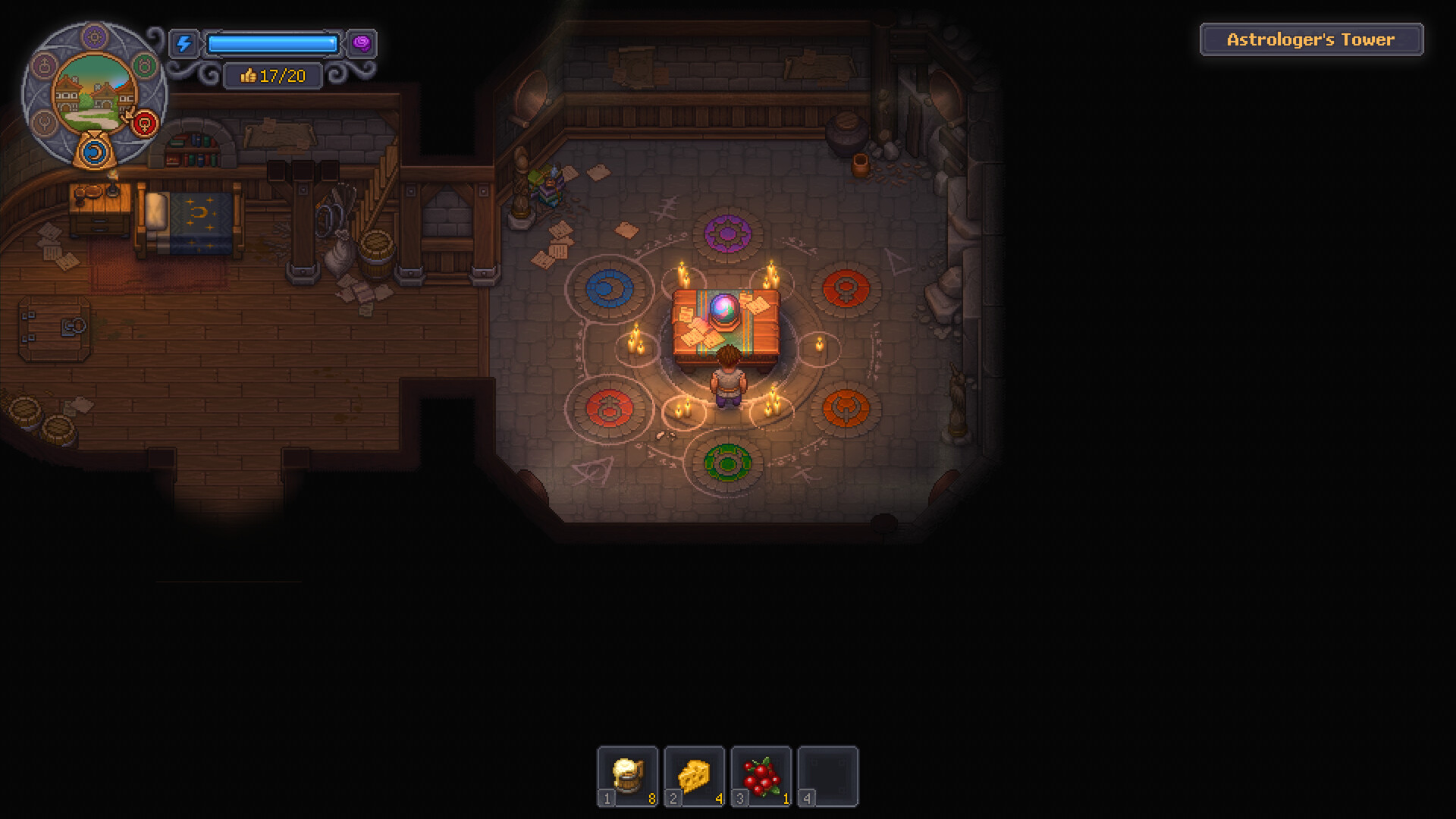
The subterranean alchemy laboratory beneath the church is where raw botanical and mineral resources are refined into reactive magical components.
Every alchemical recipe combines one powder, one solution, and one extract across two tiers of Alchemy Workbenches. Storing reagents in categorized wall shelves streamlines high-volume brewing.
Unlocking the forbidden Necronomicon Codex reveals dark distillation procedures that extract spiritual ectoplasm and demonic ichor from tainted subterranean monster remains.
| Lab Station | Input Raw Materials | Extraction Method | Resulting Reagent Class | Key Recipe Utility |
|---|---|---|---|---|
| Alchemy Mill | Bones, Sulfur, Cabbage, Slime | Mechanical Pulverization | Alchemical Powders (White, Toxic, Life) | Embalming fluids & agricultural fertilizers |
| Hand Mixer | Mushrooms, Brains, Honey, Crop Waste | Centrifugal Emulsification | Alchemical Solutions (Health, Spirit, Acid) | Health draughts & embalming catalysts |
| Distillation Cube | Magical Flowers, Bile, Dark Organs | Thermal Evaporation | Alchemical Extracts (Gold, Silver, Dark) | Master tier potions & metal transmutations |
| Alchemy Workbench I | Powder + Solution | Two-Stage Chemical Synthesis | Basic Elixirs & Speed Draughts | Early utility potions & ink components |
| Alchemy Workbench II | Powder + Solution + Extract | Three-Stage Transmutation | Embalming Injections & Golden Draughts | Master embalming & dark soul vessels |
Laboratory Throughput Assessment: Establishing a systematic extraction pipeline across all three mechanical processing stations prevents ingredient deficits during weekly sermon preparation. Processing animal bones and crop waste through the Alchemy Mill provides an abundant baseline of white powder and growth solutions for both embalming injections and vineyard fertilizers. Keepers should maintain adequate stocks of conical glass flasks by smelting river sand in the workyard furnaces, ensuring brewing operations never stall.
Verified in Official Updates 1.008 and 1.009: keep active undead workers within your camp capacity cap to avoid the zombie Panic debuff, and space workyard conveyor lanes clearly around the Sawhorse, Town Warehouse, and vine cellar.
Alchemy Mill & Hand Mixer Extraction Formulas
Mastering ingredient decomposition enables keepers to derive high-value alchemical reagents from common wilderness forage and morgue byproducts.
| Source Ingredient | Processing Bench | Output Reagent | Secondary Byproduct | Core Tactical Application |
|---|---|---|---|---|
| Human Bone | Alchemy Mill | White Powder | Zero Waste | Silver & Gold embalming solutions |
| Red Poppy Flower | Hand Mixer | Health Solution | Organic Residue | Healing elixirs & red candle wax |
| Toxic Green Mushroom | Distillation Cube | Toxic Extract | Alchemical Slag | Acidic etching draughts & Gold Injections |
| Bee Honey | Hand Mixer | Life Solution | Beeswax | Agricultural stimulant & stamina pastilles |
Reagent Extraction Blueprint: Processing skeletal remains through the mechanical mill yields clean white powder with zero material degradation, establishing a self-sustaining foundation for mortuary injections. Utilizing wild red poppies and forest mushrooms provides an inexhaustible stream of health and toxic solutions without depleting valuable garden crops. Organizing ingredient storage adjacent to corresponding mills eliminates redundant player movement when compounding multi-stage alchemical recipes. Keepers should maintain dedicated reagent bins marked with color-coded labels to prevent accidental loss of volatile distillation extracts during peak brewing cycles.
Cold Storage Pallets, Salt Baths & Decay Mitigation
Corpse decomposition begins immediately upon delivery. Constructing refrigerated morgue pallets and salt immersion baths halts bacterial degradation, preserving tissue integrity for complex surgeries.
| Preservation Fixture | Construction Cost | Decay Reduction | Energy / Ice Requirement | Capacity Limit |
|---|---|---|---|---|
| Standard Morgue Slab | 4x Wood Plank, 2x Nails | 0% (Standard Decay) | None | 1 Corpse |
| Refrigerated Pallet | 6x Iron Plate, 4x Complex Parts | 100% Frozen (0% Decay) | Requires Ice Blocks (Weekly) | 1 Corpse |
| Embalming Salt Bath | 8x Stone Slab, 4x Salt Chunk | -75% Decay Rate | Salt Water Immersion | 2 Corpses |
| Crypt Cryo-Sarcophagus | 4x Carved Marble, 2x Gold Ingot | 100% Frozen + Flesh Preservation | Permanent Magical Frost | 1 Corpse |
Mortuary Preservation Tactics: Upgrading from standard autopsy tables to refrigerated pallets halts the decay timer completely, allowing keepers to accumulate bodies until favorable embalming conditions arise. Because cadaver decay degrades burial ratings by one point per ten percent freshness lost, deploying salt immersion baths provides crucial buffer time during busy church festival days. The significant resource investment in carved marble cryo-sarcophagi pays substantial long-term dividends by safeguarding flawless noble corpses.
Step-by-Step Strategic Walkthrough
- 01 · Inspect Incoming Corpses: Check the corpse chute immediately upon delivery. Note the initial skull distribution and freshness percentage before decay begins.
- 02 · Extract Core Cleansing Organs: Remove Fat (+1 White Skull, -1 Red Skull) and Blood (+1 White Skull, -1 Red Skull) as your standard surgical baseline.
- 03 · Evaluate Variable Organs: Inspect Brains, Hearts, and Intestines with advanced anatomical perks to identify hidden skull modifiers before cutting.
- 04 · Administer Embalming Injections: Inject Lye, Silver, and Gold solutions at the Embalming Table to cleanse remaining red skulls and boost white skull caps.
- 05 · Distill Alchemical Components: Grind crops, bones, and toxic fungi into powders, solutions, and extracts to brew embalming fluids and combat draughts.
Frequently Asked Questions
What is the best way to get a 12-skull corpse in Graveyard Keeper 2?
Start with a corpse having at least 4 natural white skulls. Extract Blood and Fat (+2 White), then inject Lye (+1 White), Silver (+1 White), and Gold (+2 White) at the Embalming Table to achieve 10-12 pure White Skulls.
Does corpse decay affect autopsy skull counts?
Yes. If a corpse's freshness drops below 90%, green decay skulls replace white skulls. Once decay sets in, those lost white skulls cannot be restored.
Where do I get Zombie Juice for resurrection?
Zombie Juice is prepared at the Alchemy Workbench by combining 1x Health Solution (from poppies or cabbage) with 1x Toxic Powder (from red mushrooms).
What do I do with damaged corpses that have too many red skulls?
Extract their Blood, Fat, Skin, and Bones for crafting materials, then burn the remains at the Crematorium to receive an Ash Urn and a Burial Certificate.
How do I unlock the church cellar and alchemy lab?
Clear the first graveyard rating inspection with the Bishop (+5 rating), attend your first church sermon, and complete the Bishop's quest to unlock the cellar hatch.
Can I store corpses indefinitely without decay?
Yes. Placing corpses onto Refrigerated Morgue Pallets completely freezes the decay percentage at its current level.
What is the purpose of the Distillation Cube?
The Distillation Cube uses heat distillation to extract pure essences, alcohol, and volatile extracts needed for master-tier embalming fluids and combat draughts.
Can you craft Dream Dust in Graveyard Keeper 2?
No. There is no Dream Dust in Graveyard Keeper 2. Developer Lazy Bear Games removed the GK1 alchemical powder entirely from the sequel. Players searching for 'Dream Dust' are almost always looking for the Plague Doctor's main questline, 'Plague Doctor's Beautiful Dream'. Official Update 1.008 explicitly resolved the main quest progression soft-lock where completing Linda's Ball before the Plague Doctor's Beautiful Dream blocked basement access and halted alchemy progression.
What should I do if the Crematorium or Resurrection Table freezes?
Official Update 1.005 resolved bugs where the Crematorium locked up with a corpse on the table and the Resurrection Table reset prepared body states or blocked resurrection even when quest items were met. Update 1.007 also fixed a crash when a zombie caretaker picked up items from inventory, and Update 1.009 cleaned up collisions on the crematorium and resurrection table.
How does the RGB Three-Rune alchemy system work in Graveyard Keeper 2?
Community alchemy recipe logs on r/GraveyardKeeper document that Graveyard Keeper 2 replaces the first game's powder/solution/essence combination with a streamlined RGB Three-Rune System (Red, Green, and Blue Runes) across Laboratory 1 and Laboratory 2. Combining specific RGB rune ratios crafts Paint, Lacquer, Explosive Dust, Healing potions, Berserker potions, Zombie Motivator potions, and Damage II potions (2 green and 2 red runes).
Why shouldn't I max out the Perfect Autopsy skill immediately?
Community reports on r/GraveyardKeeper warn against immediately maxing out the Perfect Autopsy skill early on, because unlocking a specific Anatomy Inspiration requires failing multiple surgical extractions first. Trigger that failure-based Anatomy Inspiration on disposable low-skull corpses before eliminating surgical mishap chances.
Related Strategy Guides
Editions & Pre-Order
Town & QuestsTown Restoration
Technical & SystemsMultiplayer Status
Combat & DungeonsTower Defense & Base
Morgue & GraveyardCorpse Decay & Morgue
Morgue & GraveyardGraveyard Rating
Technical & SystemsDemo & Save Transfer
Workyard & AutomationConveyors & Factory
Town & QuestsFast Travel & Map