
Launch status: Graveyard Keeper 2 is out now worldwide (September 22, 2026) on PC, PS5, Xbox Series X|S, Switch & Switch 2 — full details in the release date & platform schedule.
On this page 12 sections
- Direct Solution & Tactical Verdict
- Core Data & Verification Matrix
- Official Video Reference
- Engine Modernization & 3D Spatial Geography
- Performance, Frame Pacing & Display Optimization
- User Interface & Hotbar Management Modernization
- The Grand Inquisitor Role & Municipal Governance
- Inquisitorial Decrees & Town District Influence
- Legacy Manual Workyard vs GK2 Modular Conveyors
- Future-Proofing: Post-Launch Devpost & Rebalance Roadmap
- Step-by-Step Strategic Walkthrough
- Frequently Asked Questions
Core Data & Verification Matrix
| Engine Paradigm | Full 3D graphics pipeline with dynamic lighting vs legacy 2D pixel art |
| The Town Status | Fully explorable, multi-district urban center vs perpetually locked GK1 gate |
| Fast Travel System | Interactive Milestone pillar network vs legacy single-use travel consumables |
| Combat Architecture | Tactical real-time battles with zombie squads vs primitive sword poke hitbox |
| Undead Automation | Modular assembly conveyors and factory tables vs isolated single-task zombie stations |
| Release Date | Official worldwide launch on September 22, 2026 across PC and consoles |
Official Video Reference
Verified gameplay showcase footage covering key mechanics and features discussed in this guide.
Engine Modernization & 3D Spatial Geography
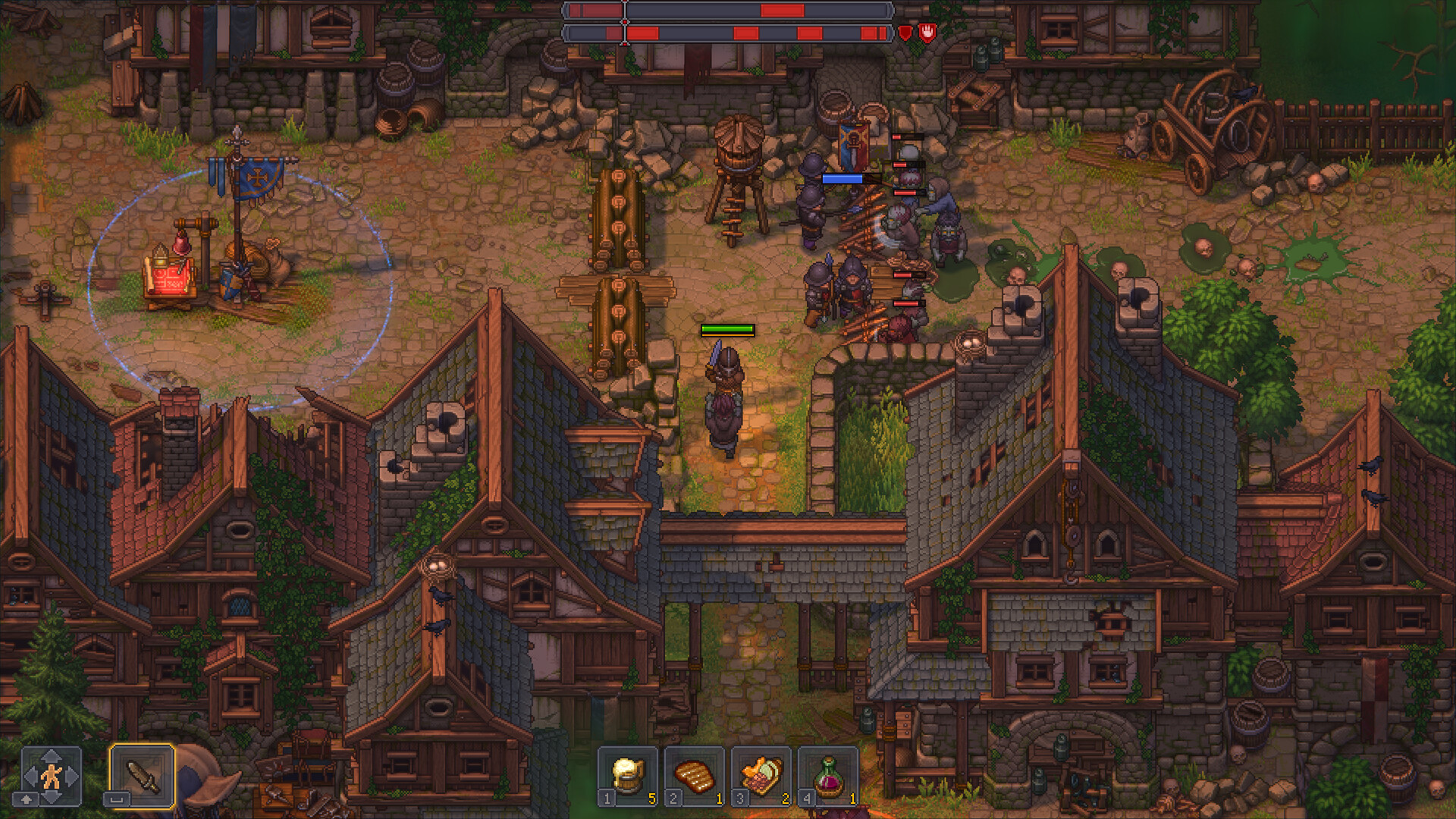
The shift from a 2D sprite engine to a fully realized 3D world fundamentally expands the spatial complexity of the Keeper's estate and surrounding wilderness.
Dynamic lighting shaders simulate authentic atmospheric conditions, from oppressive morning mists drifting across the cemetery to flickering torchlight in the underground morgue. Elevation changes now create distinct tactical terrain advantages.
Multi-tier elevations allow vertical construction, where underground cellar facilities integrate seamlessly with surface workyards through cargo hoppers and drop chutes.
| Feature Domain | Graveyard Keeper 1 (Legacy) | Graveyard Keeper 2 (Modern) | Gameplay Impact | Technical Architectural Shift |
|---|---|---|---|---|
| Graphics Engine | Fixed 2D Sprite Grid | Full 3D Engine with Dynamic Shaders | Vertical exploration and dynamic line-of-sight | DirectX 12 / Vulkan rendering pipeline |
| The Town | Locked gate with joke ending | Playable multi-district urban sprawl | Extensive municipal economy and vendor network | Modular streaming urban district meshes |
| Fast Travel | Single-use travel items | Networked ancient Milestone pillars | Zero-friction transit across expansive biomes | Persistent world coordinate teleporters |
| Combat Model | Static 1-button melee poke | Tactical street combat with squad orders | Deep defensive strategy during night sieges | Real-time AI pathing with group aggro |
| Workyard Logistics | Manual hauling between benches | Integrated conveyor chutes & sorting hoppers | Automated high-throughput manufacturing | Physics-based item transport network |
Architectural Upgrade Assessment: Shifting from a restrictive two-dimensional sprite framework to a modern 3D rendering pipeline fundamentally transforms player interaction across both estate management and combat engagements. While the original title relied on static obstacle barriers to simulate distance, the sequel introduces dynamic multi-tiered terrain where subterranean crypts connect physically to exterior processing yards. The complete reconstruction of The Town from an inaccessible comedic barrier into a living, district-based metropolis provides an expansive sink for agricultural and industrial commodities that never existed in the predecessor.
Verified across the 1.0 release through Official Update 1.009: Graveyard Keeper 2 expands into full 3D town districts, conveyor workyards, and undead defense battles while preserving the dark humor and autopsy loop of the original game.
Performance, Frame Pacing & Display Optimization
Transitioning to a 3D geometry pipeline introduces higher GPU draw call demands. Ensuring stable frame pacing requires tuning anti-aliasing and ambient occlusion settings, particularly when large undead workforces occupy the workyard.
| Hardware Target | Resolution Profile | Target FPS | Recommended Quality Preset | Key Optimization Toggle |
|---|---|---|---|---|
| Handheld PC | 800p / 16:10 | 45-60 FPS | Medium (SSAO Off, Shadows Low) | Enable Dynamic Resolution Scaling |
| Mid-Range Desktop | 1080p / 16:9 | 60 FPS Locked | High (Full Textures, SSAO Medium) | Enable In-Game V-Sync & Borderless |
| High-End Rig | 1440p / 4K | 120+ FPS | Ultra (Volumetric Fog, High Shadows) | Max Tessellation & Shadow Cascades |
| Console Baseline | Dynamic 4K | 60 FPS Performance Mode | Console Optimized Preset | Lock Refresh to Display Baseline |
Hardware Performance Profile: Configuring graphics parameters according to platform targets prevents micro-stutter during heavy combat encounters in liberated Town sectors. On handheld devices, disabling screen-space ambient occlusion and capping rendering targets at forty-five frames yields substantial battery endurance improvements without degrading text readability. Desktop users experiencing screen tearing should engage borderless windowed mode paired with driver-level frame limiting to eliminate vertical tearing artifacts during rapid camera panning across dense cemetery plots.
User Interface & Hotbar Management Modernization
Graveyard Keeper 2 completely overhauls the legacy inventory grid. The new interface introduces categorical sorting tabs, instant auto-stacking into nearby storage chests, and radial item quick-selection wheels for combat draughts.
| UI System | GK1 Implementation | GK2 Modernization | Efficiency Improvement | Keybinding Default |
|---|---|---|---|---|
| Inventory Sorting | Manual drag-and-drop | 1-Click auto-sort & container stack | +80% Organization speed | Key: [R] Auto-Sort |
| Quick-Select Wheel | Fixed 8-slot linear hotbar | Radial context wheel for potions & tools | Instant weapon/item swapping | Hold: [Tab] or [LB] |
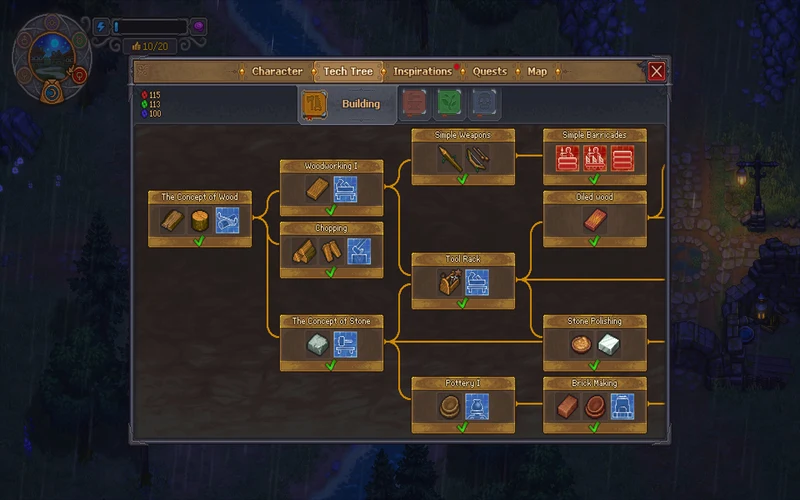
| Tech Tree Display | Linear branching scroll | Constellation map with search filter | Instant keyword tech location | Key: [K] Tech Web |
| Autopsy HUD | Basic skull count counter | Organ breakdown overlay with stat preview | Predictive quality calculation | Interactive morgue panel |
User Experience Refinement: Introducing intelligent container auto-stacking addresses one of the most persistent community pain points from the original title, eliminating hours of repetitive manual item organization. The radial quick-select wheel allows seamless transitions between agricultural implements, surgical scalpel tools, and combat broadswords without opening inventory menus. Furthermore, the search-enabled technological constellation map provides immediate clarity regarding prerequisite requirements for advanced masonry and alchemical apparatuses. Players utilizing gamepads also benefit from dedicated d-pad shortcuts that instantly toggle between personal inventory bags and surrounding estate storage chests.
The Grand Inquisitor Role & Municipal Governance
While the original game positioned the Keeper as an unwilling subservient to the fickle Grand Inquisitor, the sequel elevates you into the role of civic inquisitorial authority.
Keepers now preside over urban tribunal hearings, balancing diplomatic influence between religious zealots, wealthy town burghers, and aristocratic crown envoys. Every judicial decree alters district commerce and faction support.
Preserving order in liberated districts requires building watchtowers, dispatching undead guard patrols, and enforcing quarantine curfews during full moon undead swarms.
| Civic Domain | Inquisitorial Power | Faction Affected | Economic Consequence | Risk Factor |
|---|---|---|---|---|
| Heresy Tribunals | Condemn corrupt merchants | Burghers vs Church | Confiscates assets; decreases trade | Triggers street unrest if overused |
| Witch Hunt Decrees | Authorize vineyard purges | Inquisition Zealots | Boosts Faith; provides cheap labor | Reduces high-tier wine production |
| Quarantine Curfews | Lock down infested districts | Town Folk & Laborers | Prevents zombie outbreaks | Freezes market tax collection |
| Cemetery Expansion | Requisition municipal land | Crown Nobility | Expands burial capacity by 50% | Demands high royal permit fees |
Judicial Authority Trade-Offs: Balancing inquisitorial authority requires calculating both immediate political gains and downstream commercial impacts across municipal markets. Confiscating assets from merchant cartels provides sudden silver windfalls for capital infrastructure projects, but drives vendor commodity prices sharply upward for multiple weekly cycles. Conversely, placating religious zealots unlocks potent Faith yields and church donations at the expense of agricultural exports, demanding careful recalibration based on current tech tree priorities. Shrewd players should alternate decrees between mercantile deregulation and religious tithes to sustain a steady flow of both coin and spiritual energy.
Never let any faction's favor drop below 20%. Dissatisfied burghers will halt grain deliveries to your tavern, while alienated church authorities will refuse to validate your weekly sermon prayers.
Inquisitorial Decrees & Town District Influence
Enacting municipal decrees from the Town Hall podium shapes the social and financial climate of each liberated neighborhood. Strategic decree selection directly boosts taxation yields and factory productivity.
| Decree Name | Administrative Cost | Active Duration | District Benefit | Municipal Penalty |
|---|---|---|---|---|
| Tithe Enforcement | 5 Faith, 1 Silver | 6 In-Game Days | +25% Church donation yield | -10% Town burgher loyalty |
| Industrial Labor Act | 8 Faith, 2 Silver | 12 In-Game Days | +30% Undead workshop speed | Slight unrest among free laborers |
| Sanctified Sanitation | 4 Faith, 50 Copper | 6 In-Game Days | -40% Corpse decay rate | Requires daily holy water supply |
| Merchant Licensing | 10 Faith, 5 Silver | Permanent | Unlocks luxury trade stalls | Requires Crown royal approval |
Governance Optimization Strategy: Synchronizing decree enactments with scheduled market days amplifies economic returns across liberated urban sectors. Passing the Tithe Enforcement edict directly prior to Pride Day maximizes donation collections, generating substantial silver capital for purchasing metal ingots. Keepers should maintain adequate Faith reserves to sustain the Sanctified Sanitation edict during extended heatwave cycles, ensuring that corpses delivered to the morgue retain pristine tissue quality. Failing to maintain civic decrees during municipal expansion allows local corruption to spread, reducing shopkeeper stock replenishment rates by half.
Legacy Manual Workyard vs GK2 Modular Conveyors
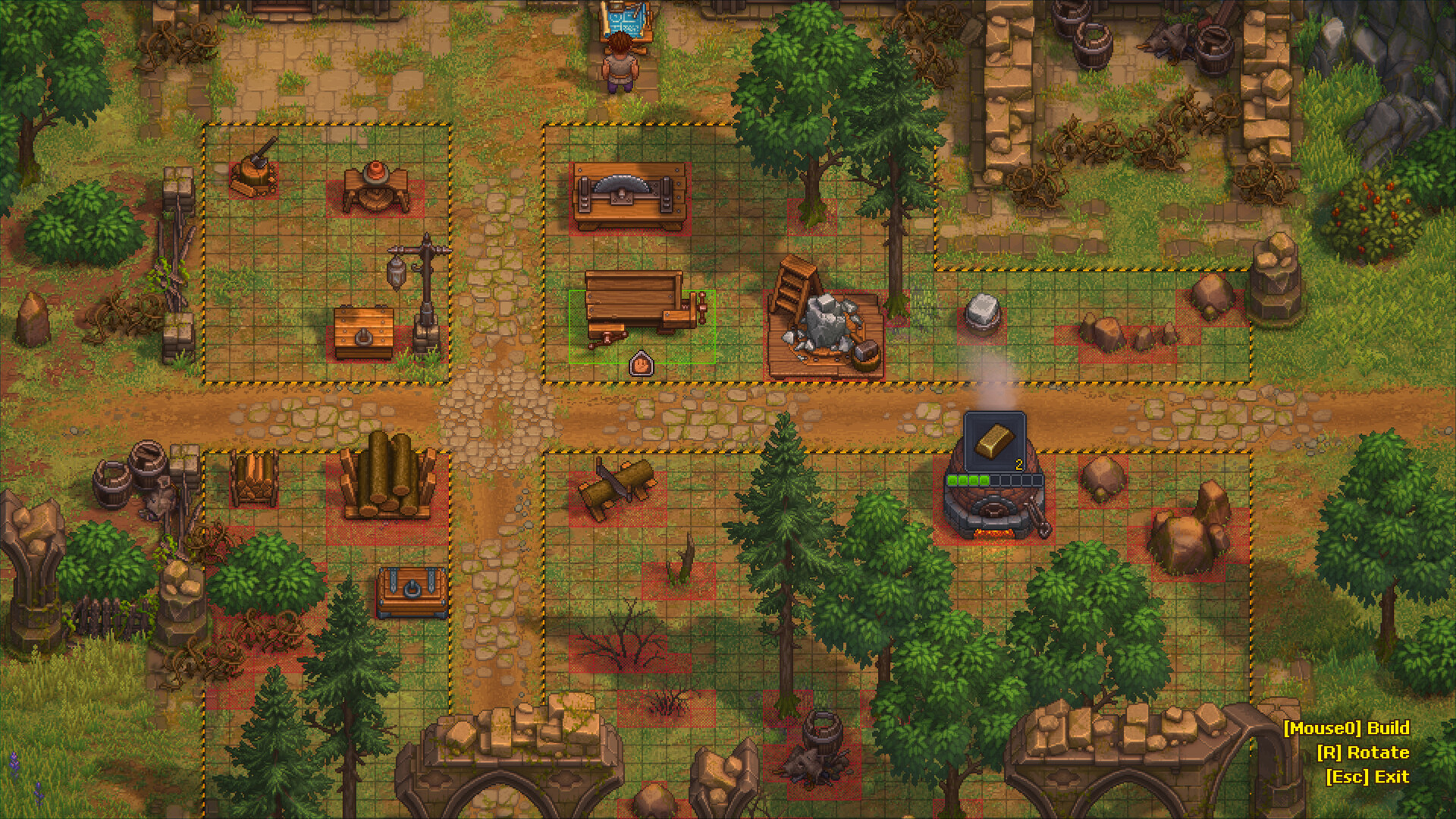
The original game's isolated zombie stations required manual player intervention to transfer materials across disparate workshops. In GK2, directional conveyor belts and mechanical hoppers unify the entire estate into a continuous automated network.
| Operational Phase | GK1 Zombie System | GK2 Conveyor Automation | Labor Efficiency | Bottleneck Risk |
|---|---|---|---|---|
| Raw Hauling | Zombies carry 1 log/stone at a time | Continuous directional belt transport | +400% Material throughput | Input hopper overflow stalls belt |
| Intermediate Crafting | Manual queue assignment per bench | Mechanical assembly tables auto-pull | +250% Fabrication speed | Tool breakage stops crafting queue |
| Finished Storage | Manual trunk sorting | Smart sorting hoppers route to bins | +300% Storage clarity | Full chests cause line blockages |
| Resource Refinement | Isolated kiln/furnace batches | Direct chute feeding into smelting banks | +350% Ingot output | Fuel exhaustion shuts down kilns |
Industrial Logistics Transition: Integrating automated conveyor networks into the workyard eliminates the severe logistical bottlenecks that hampered late-game operations in the original title. Undead laborers stationed at mechanical assembly benches pull raw flitch and cut stone directly from moving belts, executing continuous fabrication queues without requiring player item transfers. Properly sizing buffer chests at conveyor junction points guarantees that sudden production surges at the stone quarry do not overwhelm downstream assembly tables.
Future-Proofing: Post-Launch Devpost & Rebalance Roadmap
In an official developer dispatch ('Graveyard Keeper 2 - Plans for the future', October 2, 2026), developer Lazy Bear Games addressed community feedback regarding grindy chore-like tasks and outlined fundamental rebalancing planned for upcoming updates.
| Gameplay Area | Community Friction Point | Confirmed Developer Adjustment | Quality of Life Utility |
|---|---|---|---|
| Conveyor Gear Economics | Limited gear crafting yield stalls automation | Number of gears zombies provide for conveyor belts will be increased (with & without perk) | Accelerates high-volume factory routing |
| Workstation Relocation | Constructed benches permanently fixed in place | Already constructed workstations will be movable | Eliminates rebuilding costs when redesigning workyards |
| Kiln & Furnace Automation | Smelting benches require repetitive manual restarts | Zombie-helpers will gather crafted resources and restart crafts in Kilns and Furnaces | True hands-off metal and glass fabrication |
| Compost & Peat Harvesting | Agricultural compost bins require manual digging | Zombie-farmers will be able to collect Peat and start new crafts at Compost Heaps | Continuous organic fertilizer production |
| Sunday Church Sermons | Slow early-game spiritual currency progression | Faith granted for the sermons will be increased across all prayer tiers | Faster technology research and zombie resurrection |
| Undead Disposal & Sanitation | Suboptimal early zombies crowd workyards | Cremation for zombies will be officially implemented | Safe retirement of low-skull workers for salt & ash |
Developer Roadmap Assessment: Lazy Bear Games' active response to player chore-fatigue reinforces GK2's long-term design trajectory toward seamless estate management. Permitting constructed workbench repositioning and introducing automated kiln reload cycles directly targets the most tedious bottlenecks identified by the player community. Furthermore, empowering agricultural zombies to manage compost heaps and elevating weekly sermon Faith payouts ensures both industrial and theological progression loops scale smoothly into late-game municipal trade.
Step-by-Step Strategic Walkthrough
- 01 · Traverse the Open 3D World: Explore an expansive three-dimensional environment with dynamic lighting, rotating camera perspectives, and multi-elevation terrain.
- 02 · Reclaim The Town District by District: Enter the previously inaccessible Town, purge hostile zombie mobs from public squares, and restore merchant shops and civic infrastructure.
- 03 · Deploy Tactical Fast Travel: Discover and ignite ancient stone Milestone pillars across the map, establishing a zero-cooldown fast-travel grid.
- 04 · Command Zombie Military Squads: Transition from simple manual labor to commanding organized undead cohorts with weapons, armor, and combat banners.
- 05 · Exercise Grand Inquisitorial Authority: Enact civic edicts, conduct heresy tribunals, and balance political favor between the crown, clergy, and burghers.
Frequently Asked Questions
How does the day-night lighting model influence cemetery operations?
The full 3D dynamic sun orbit creates distinct shadow casting and low-light periods that alter enemy aggression and corpse decay rates. During heavy midnight mists, wandering sewer fiends occasionally roam closer to the cemetery perimeter, requiring keepers to illuminate pathways with placed iron lanterns or assign night patrols.
Is Graveyard Keeper 2 a direct sequel to the original story?
Yes. The sequel continues the dark comedic narrative of the Keeper, expanding on the lore of the mysterious portal, the ancient Church, and the newly accessible Town.
Can I explore The Town in Graveyard Keeper 2?
Yes! Unlike the first game where The Town was permanently locked behind a fatal lightning strike joke, GK2 features a fully explorable, multi-district Town that you liberate and rebuild.
How has combat changed between GK1 and GK2?
Combat has evolved from a primitive sword poke hitbox into real-time tactical street skirmishes, featuring defensive barricades, watchtowers, combat potions, and commanding undead squads.
Are single-use travel items still in the game?
No. Graveyard Keeper 2 replaces single-use consumables with an interconnected network of ancient stone Milestone pillars that grant instant travel once activated.
How does zombie automation differ from the first game?
Instead of isolated zombies carrying individual logs across the map, GK2 features modular conveyor belts, mechanical assembly benches, and automated sorting hoppers.
Is Gerry the skull companion still in the sequel?
GK2 introduces a brand-new talking skull companion with distinct dialogue and guidance, though Gerry remains a beloved legendary reference in world lore.
What happened to Dream Dust from GK1?
Developer Lazy Bear Games removed Dream Dust entirely from Graveyard Keeper 2. In its place, the sequel introduces dark autopsy techniques, anatomical skull cleansing, and the Necronomicon Codex for advanced dark rituals.
What platforms can play Graveyard Keeper 2?
Graveyard Keeper 2 is available on PC (Steam, Epic Games Store, GOG), PlayStation 5, Xbox Series X|S, and Nintendo Switch 2.
Related Strategy Guides
Zombie Armies
Alchemy & MagicAlchemy & Autopsy
Technical & SystemsEditions & Pre-Order
Town & QuestsTown Restoration
Technical & SystemsMultiplayer Status
Combat & DungeonsTower Defense & Base
Morgue & GraveyardCorpse Decay & Morgue
Morgue & GraveyardGraveyard Rating
Technical & SystemsDemo & Save Transfer