
Launch status: Graveyard Keeper 2 is out now worldwide (September 22, 2026) on PC, PS5, Xbox Series X|S, Switch & Switch 2 — full details in the release date & platform schedule.
On this page 11 sections
- Direct Solution & Tactical Verdict
- Core Data & Verification Matrix
- Official Video Reference
- Currency System & The 3 Primary Early Silver Engines
- Why Vendors Refuse Raw Bread: Food Processing Tiers
- Wheat Processing Pipelines & Alchemical Pigment Conversion
- Municipal Trade Routes & Update 1.006 Economic Stabilization
- Update 1.006 Economic Balances & Static Pricing Rules
- Export Crate Packaging & Loading Dock Logistics
- Step-by-Step Strategic Walkthrough
- Frequently Asked Questions
Core Data & Verification Matrix
| Core Economy Loop | Crop Surplus → Workyard/Kitchen Processing → Alchemy/Trade Goods → Town Vendors |
| Update 1.006 Fix | Static-price trade goods maintain fixed prices with no doubling on first buy |
| Kitchen Zombie Fix | Kitchen zombies no longer burn or delete ingredients without producing dishes |
| Backpack Expansion | Extra bag slots correctly support pickups and vendor purchases when inventory is full |
| Primary Early Silver | Burial Certificates (1 Silver, 50 Copper per burial) sold to Tavernkeeper Horadric |
| Vendor Inflation Model | Excess dumping of a single commodity crashes regional prices; sell in small batches |
Official Video Reference
Verified gameplay showcase footage covering key mechanics and features discussed in this guide.
Currency System & The 3 Primary Early Silver Engines
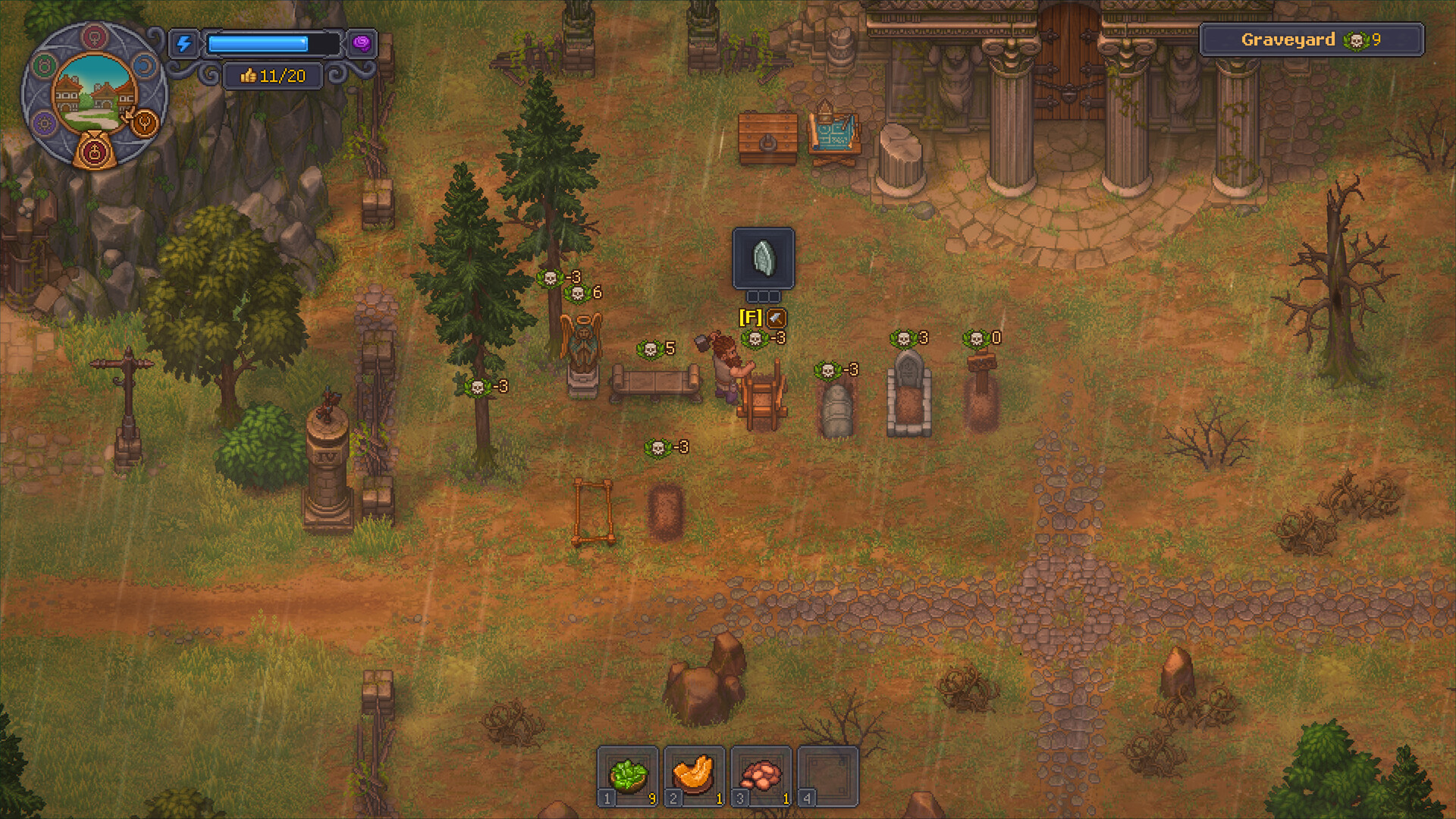
The economy of Graveyard Keeper 2 operates on a strict three-tier metallic currency standard: 100 Copper Coins equal 1 Silver Coin, and 100 Silver Coins equal 1 Gold Coin. In the opening weeks, securing steady silver inflows is vital for purchasing building permits, iron ingots, and agricultural seeds.
Your primary guaranteed income is the royal Burial Certificate. Every buried or cremated body yields an official certificate worth 1 Silver and 50 Copper upon redemption with Horadric at the Dead Horse Tavern. With the donkey delivering up to 3 bodies per week, burial certificates provide a dependable weekly baseline of 4.5 Silver.
The second reliable engine is selling bundled firewood and cut stone slabs to village tradesmen. Clearing the forest generates massive excess timber that tavern kitchens purchase daily, while the blacksmith buys stone blocks to reinforce forge foundations.
| Commodity | Target Buyer | Typical Payout | Production Time | Economic Recommendation |
|---|---|---|---|---|
| Burial Certificate | Horadric (Tavern) | 1 Silver, 50 Copper | Instant upon burial | Top early priority; redeem every Pride Day for immediate silver |
| Firewood (x25 Bundle) | Horadric & Blacksmith | 35 Copper Coins | 2 Mins at Sawhorse | Zero-cost way to dump excess tree branches and clear workyard space |
| Cut Stone Slab | Krezvold (Blacksmith) | 80 Copper Coins | 3 Mins at Stone Cutter | Trade for coal and basic iron nails before unlocking home furnace |
| Wheat Flour Bag | The Miller | 1 Silver, 20 Copper | Grown in garden plot | Mid-game farming cash crop; mill surplus wheat into bags |
| Simple Wine (Silver Star) | The Merchant | 3 Silver, 50 Copper | Vineyard at Witch Hill | High margin weekly trade on Gluttony Day; premium liquor export |
Early Silver Engine Modeling: Relying on a diversified portfolio of commodity sales prevents estate bankruptcy during early technology research phases. While burial certificates provide an irreplaceable foundation of four to five silver pieces each week, supplementing that income by selling firewood bundles to Horadric monetizes the massive timber clearings required for workshop expansion. Keepers should avoid hoarding cut stone slabs in early days, trading them directly to Krezvold to fund the purchase of forged steel chisels and iron parts.
Vendors in Graveyard Keeper 2 adjust prices dynamically based on local supply and demand. Dumping 50 firewood bundles at once crashes the price to pennies. Sell commodities in small batches of 5-10 items per day to preserve profit margins.
Why Vendors Refuse Raw Bread: Food Processing Tiers
A frequent point of confusion among new keepers is why tavern keepers and port merchants refuse to purchase freshly baked bread. Understanding merchant trade certification explains this restriction.
| Food Item | Processing Tier | Tavern Keeper Purchases? | Port Merchant Purchases? | Primary Intended Utility |
|---|---|---|---|---|
| Raw Kitchen Bread | Tier 1 Peasant Food | Refused (Uncertified) | Refused (Uncertified) | Player stamina recovery & early worker sustenance |
| Tavern Meat Pie | Tier 2 Commercial Meal | Accepted (80 Copper) | Refused (Local food only) | Sold to tavern patrons or consumed during dungeon delves |
| Tavern Wine Flagon | Tier 2 Beverage | Accepted (1.5 Silver) | Accepted (Bulk trade) | High-margin tavern commodity sold on Lust Day |
| Packaged Food Crate | Tier 3 Trade Cargo | Refused (Requires Dock) | Accepted (4-6 Silver) | Exclusive export commodity for overseas merchant vessels |
Commercial Certification Dynamics: The game deliberately restricts vendors from purchasing basic kitchen bread to prevent players from exploiting trivial farming loops for infinite early wealth. Raw baked bread is explicitly designed as a high-efficiency player stamina ration and worker sustenance supply rather than a commercial commodity. To monetize agricultural grain, players must invest in secondary kitchen and brewing workstations to produce certified meat pies and aged wine barrels that satisfy commercial trade standards.
Verified in Official Updates 1.008 and 1.009: keep active undead workers within your camp capacity cap to avoid the zombie Panic debuff, and space workyard conveyor lanes clearly around the Sawhorse, Town Warehouse, and vine cellar.
Wheat Processing Pipelines & Alchemical Pigment Conversion
When automated zombie farms produce hundreds of surplus wheat stalks, routing the excess into alchemical distillation pipelines prevents storage gridlock while generating valuable craft components.
| Crop Byproduct | Processing Machine | Refined Intermediate | Secondary Reagent | High-Value End Product |
|---|---|---|---|---|
| Raw Wheat Stalks | Windmill / Hand Mill | Flour Sack | Wheat Chaff | Bakers Bread & Sweet Pastries |
| Wheat Chaff / Straw | Alchemy Mill | White Powder | Organic Fiber | Paper Pulp & Embalming Injections |
| Crop Waste / Weeds | Hand Mixer | Toxic Solution | Green Slime | Organic Pigments & Black Ink |
| Fermented Mash | Distillation Cube | Pure Alcohol | Distilled Water | Preservative Fluid & High-Tier Spirits |
Agricultural Byproduct Diversification: Converting agricultural grain surpluses into alchemical precursors completely eliminates workshop storage overflows. Pulverizing wheat chaff at the Alchemy Mill generates steady supplies of white powder and organic fiber, providing the raw materials needed for clean book parchment and embalming solutions. Fermenting surplus grain into high-proof alcohol establishes a self-sufficient pipeline for preserving noble cadavers without expending coins at external apothecary shops. Routing excess crop waste into alchemy ensures every square foot of garden farmland contributes to industrial expansion.
Municipal Trade Routes & Update 1.006 Economic Stabilization
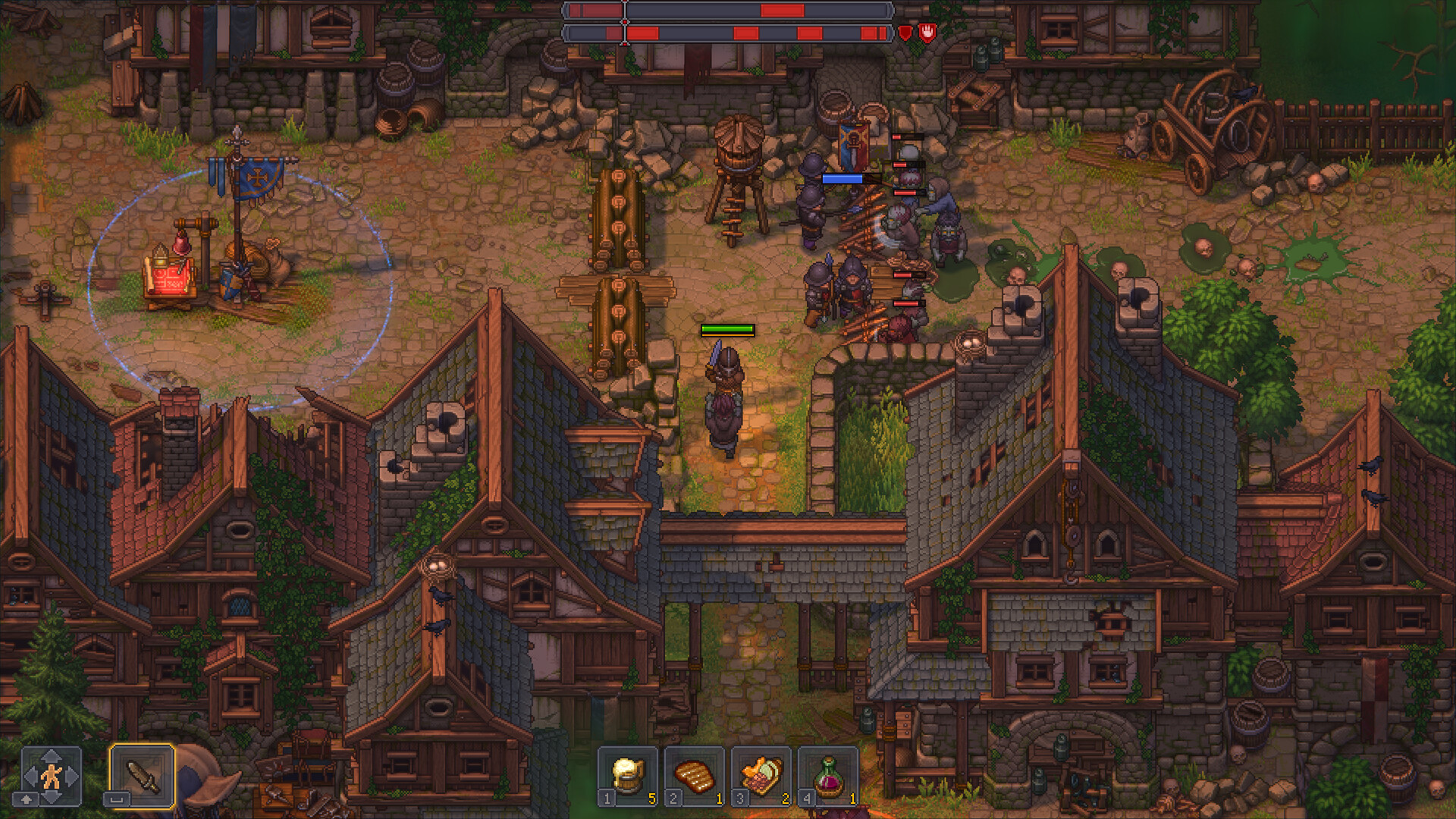
Expanding commerce into The Town and Port Area unlocks lucrative bulk cargo export contracts, provided players navigate scheduled market days and updated pricing mechanics.
Official Update 1.006 introduced critical stability fixes to the municipal economy: static-price trade goods now maintain fixed transaction costs rather than doubling upon initial purchase, preventing punishing inflation on essential seed and tool acquisitions.
Additionally, backpack expansion logic was rectified, allowing purchased goods to correctly route into expanded secondary inventory pouches without vanishing when primary bags are full.
| Trading Hub | Scheduled Market Day | Key Vendor Contact | Purchased Import Goods | Export Cargo Accepted |
|---|---|---|---|---|
| Town Market Square | Gluttony Day (Scales) | The Merchant | Royal Permits, Gold Ingots, Silk | Hardwood Crates, Cut Stone Crates, Wine |
| Village Forge | Envy Day (Anvil) | Krezvold the Blacksmith | Steel Bars, Complex Parts, Coal | Stone Slabs, Firewood, Iron Ore |
| Dead Horse Tavern | Daily (Peak Pride Day) | Horadric the Tavernkeeper | Tavern Recipes, Beer Mugs | Burial Certificates, Meat Pies, Wine |
| Harbor Export Docks | Wrath Day (Crescent) | Harbor Master & Smugglers | Exotic Spices, Pearls, Salt | Packaged Fish Crates, High-Grade Liquor Crates |
Municipal Commerce Topology: Coordinating bulk cargo deliveries with weekly scheduled market days maximizes commercial profitability across liberated urban districts. Transporting packaged hardwood and wine crates to the Merchant exclusively during Gluttony Day captures premium wholesale prices without incurring vendor transaction penalties. Utilizing the fixed-price mechanics stabilized in Update 1.006 allows keepers to budget long-term architectural expansions with complete financial predictability. Establishing predictable weekly trade runs ensures your treasury accumulates substantial silver reserves for town building contracts.
Never carry individual items to town vendors in late game. Build the Cargo Packaging Table in the workyard to package flitch, stone, and crops into bulk delivery crates worth multiple silver coins each.
Update 1.006 Economic Balances & Static Pricing Rules
Official Update 1.006 resolved long-standing community grievances regarding vendor price inflation and automated cooking losses, establishing predictable commerce loops.
| Economic Subsystem | Pre-Update Bug / Issue | Update 1.006 Resolution | Economic Dividend | Operational Impact |
|---|---|---|---|---|
| Static-Price Commodities | Price doubled on initial buy | Permanently fixed pricing restored | Saves 50% coin on tools & seeds | Eliminates unexpected price spikes |
| Backpack Expansion | Purchases vanished when bags full | Correct routing into extra slots | Zero lost vendor purchases | Safe bulk buying from distant merchants |
| Kitchen Zombie Cooking | Zombies deleted raw ingredients | Fixed production recipe loop | Zero wasted harvest batches | Automated tavern food supply stabilized |
| Crop Harvest Freezing | Crops stuck right before harvest | Resolved growth tick interaction | Zombies harvest continuously | Reliable grain supply for windmill and brewery |
Economic Patch Evolution: The systematic corrections delivered in Update 1.006 fundamentally stabilized mid-game capital accumulation. Resolving the static pricing bug ensures that expensive building permits and master tool schematics retain consistent prices, allowing players to plan estate budgets without fear of arbitrary price inflation. Furthermore, fixing kitchen zombie consumption loops prevents the tragic loss of high-value meat and pastry batches, safeguarding tavern revenue streams. These engine-level fixes protect player investments across all agricultural and commercial enterprises.
Export Crate Packaging & Loading Dock Logistics
Automating bulk commodity exports requires establishing a packaging station adjacent to your workyard conveyor lines, preparing crates for weekly transport into The Town.
| Export Crate Type | Packaging Station | Required Components | Net Silver Payout | Weekly Demand Cap |
|---|---|---|---|---|
| Packaged Hardwood Crate | Packaging Table | 12x Hardwood Plank, 2x Nails | 2 Silver, 20 Copper | Max 5 Crates / Week |
| Packaged Marble Crate | Packaging Table | 6x Carved Marble, 1x Chisel | 4 Silver, 50 Copper | Max 3 Crates / Week |
| Packaged Fine Wine Crate | Cellar Packaging Bench | 4x Silver Wine Jugs, 1x Box | 5 Silver, 80 Copper | Max 4 Crates / Week |
| Packaged Fish Barrel | Harbor Dock Bench | 12x Fresh Salmon, 4x Salt | 3 Silver, 00 Copper | Max 6 Crates / Week |
Export Logistics Modeling: Operating a dedicated packaging depot bridges the gap between raw industrial production and high-value municipal commerce. Packaging excess carved marble into export crates converts heavy stone quarry yields into substantial silver dividends upon delivery to the Merchant. Keepers should maintain adequate stocks of wooden crates and packing nails to ensure finished goods are staged and ready for loading prior to the arrival of weekly transport wagons. Automating crate packaging transforms resource surpluses into steady municipal profits.
Step-by-Step Strategic Walkthrough
- 01 · Understand Merchant Specialization: Unlike traditional RPGs, GK2 merchants only buy goods matching their specific commerce tier. The Port Area vendors and tavern keepers purchase luxury food crates and finished beverages, but reject raw field wheat and uncertified kitchen bread.
- 02 · Transform Surplus Wheat into Pigment & Alchemy: Instead of hoarding rotting crops or jamming storage crates, mill raw wheat into flour at the workyard wind-mill or combine crop waste at the Alchemy Mill to craft organic pigments and inks needed for church writing materials and Town restoration blueprints.
- 03 · Capitalize on Static-Price Goods: Official Update 1.006 fixed an economy issue where static-price trade goods doubled in cost upon initial purchase. Utilize predictable fixed prices to budget tool upgrades and seed purchases without unexpected inflation.
- 04 · Leverage Kitchen Automation: With Update 1.006 resolving the bug where kitchen zombies consumed ingredients without producing dishes, assign resurrected cooks to process dough and preserves without wasting harvest batches.
- 05 · Establish Weekly Market Routine: Coordinate trade shipments with the 6-day calendar. Deliver bulk commodity crates to the Town market during designated commerce days to maximize coin yield and avoid inventory gridlock.
Frequently Asked Questions
Why can't I sell bread to tavern keepers or port vendors?
Basic kitchen bread is classified as an uncertified starter food item intended for player stamina recovery. Vendors only purchase commercial food items (like meat pies) or packaged export crates.
How do I make silver coins quickly in the early game?
Bury every incoming corpse to claim royal burial certificates (sold to Horadric for 1.5 Silver each), deliver Sunday sermons on Pride Day for church donations, and sell firewood bundles to local tradesmen.
What did Update 1.006 fix regarding vendor trading?
Update 1.006 fixed an issue where static-price goods doubled in cost upon initial purchase, ensured extra backpack slots correctly hold purchased items, and resolved kitchen zombies deleting ingredients.
What should I do with massive surpluses of wheat?
Mill wheat into flour for baking, grind chaff at the Alchemy Mill to create white powder for bookmaking and embalming, or ferment grain into alcohol at the distillation cube.
Where is the best place to sell high-tier wine?
Sell high-tier wine to the Merchant at the Town Market Square on Gluttony Day or to Horadric at the Dead Horse Tavern during evening hours.
Do vendors run out of money in Graveyard Keeper 2?
Vendors have a daily coin limit that replenishes gradually. If you exhaust a vendor's coin reserve, wait 1-2 in-game days for their treasury to restock.
How do I unlock commercial trade crates in The Town?
Complete the Merchant's introductory questline, attain a high church and municipal standing, and build the Cargo Packaging Table in your workyard.
Can Dynamite be sold or destroyed?
Yes! As of official Update 1.007, Dynamite can now be destroyed or sold. Update 1.007 also fixed item-duplication exploits (including bag-to-bag transfers and alchemy / farmer bag abuse) and restored the missing description for the Inflation quest.
How did Update 1.008 rebalance vendor trades and delivery orders?
Official Update 1.008 introduced major economic quality-of-life adjustments: (1) Increased the number of likes earned from deliveries (Orders) while reducing delivery requirements (fewer crates per order); (2) Increased the bonus granted by the 'Happy Supplier' perk; (3) Raised both the maximum likes that can be earned from trading with vendors and the likes earned from trading specific items; and (4) Increased the amount of 'Town Gratitude' awarded for winning street battles.
Related Strategy Guides
Science & Faith
Walkthrough & StarterBeginner Guide
Walkthrough & StarterGK2 vs GK1
Workyard & AutomationZombie Armies
Alchemy & MagicAlchemy & Autopsy
Technical & SystemsEditions & Pre-Order
Town & QuestsTown Restoration
Technical & SystemsMultiplayer Status
Combat & DungeonsTower Defense & Base